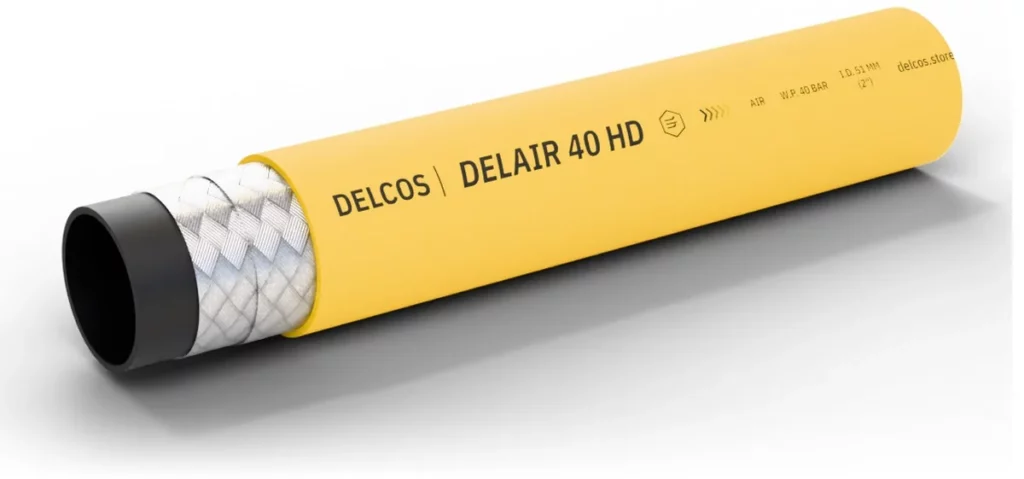
Selection
How to choose an air hose for a compressor and pneumatic tools
Pressure class, inner diameter, length, oil mist and temperature: what to check when choosing an air hose for a compressor and pneumatic tools.
Pressure test, leak tightness, electrical continuity, visual and dimensional inspection and the test report: what is checked on a hose assembly before it goes into service.
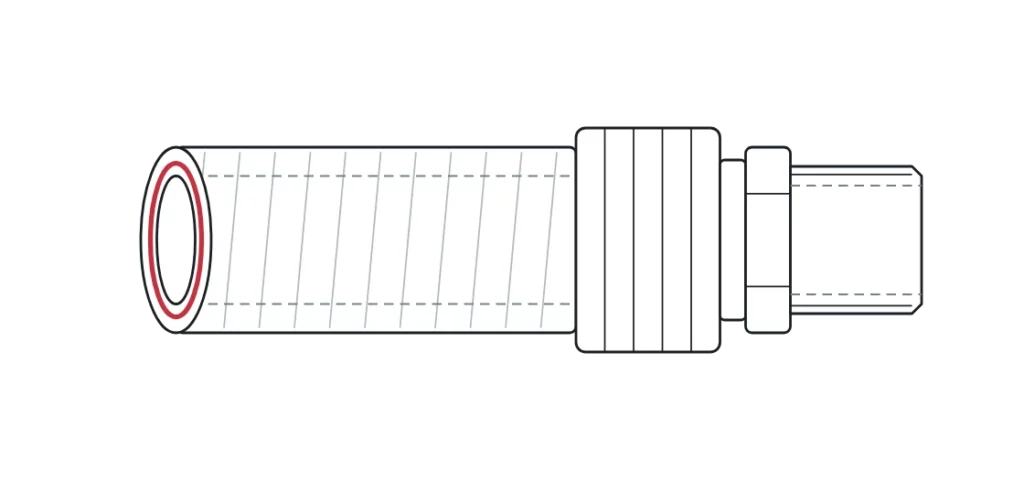
A hose assembly is only as reliable as its weakest point, and that point is usually the joint between the hose and the coupling. A test before delivery shows that the assembly holds pressure, does not leak and, where required, conducts static charge from end to end. Here is what can be checked and what you get on paper.
The assembly is held under a test pressure above its working pressure for a set time. During the test we check for leaks, for sweating through the wall and for any movement of the couplings on the hose. The test pressure and holding time are agreed in the quote and stay within the limits of both the hose and the couplings: the pressure rating of an assembly depends on the couplings as well as on the hose.
Hoses for fuel, chemicals and dry abrasive media often have an antistatic wire in the wall, so that static charge can drain. The wire only works if it is connected through the couplings at both ends. An electrical continuity check confirms this on the finished assembly.
We check the overall length, the position of the couplings, the condition of the cover and the inner tube at the ends, and the marking, if the assembly has one.
We can issue a test report. It records which assembly was tested, what was checked and the result, so that you can file it with your equipment documents.
Testing is especially worthwhile for lines that carry fuel, chemicals or steam, for high pressure lines and for lines where a static charge must not build up: see our hoses for oil and fuel, chemicals, steam and abrasive media.
The full list of details for an order is in How to order a hose assembly. More about the service: non-destructive testing of hose assemblies. Send us the details via the contacts page.
Selection
Pressure class, inner diameter, length, oil mist and temperature: what to check when choosing an air hose for a compressor and pneumatic tools.
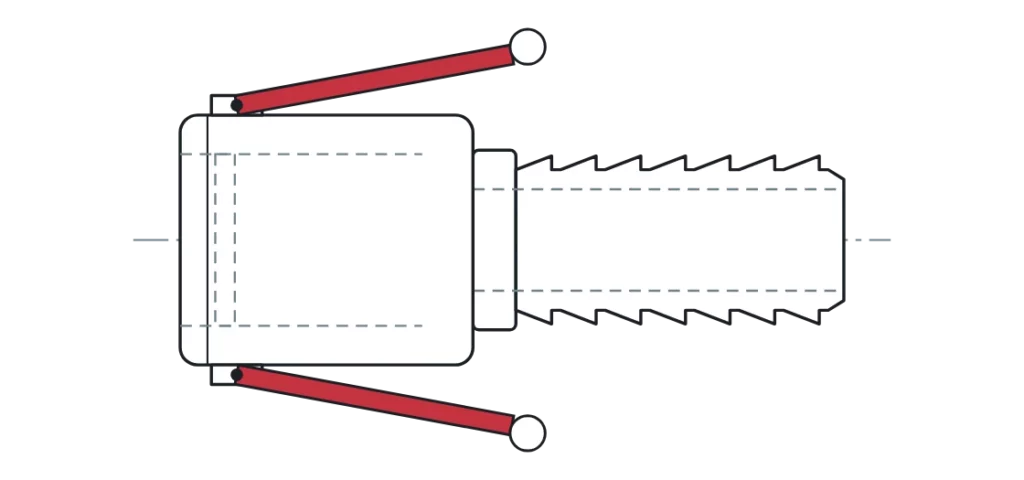
Selection
Which half of the coupling each Camlock type is, what is on its other end, how the types connect, and which sizes and materials are available.
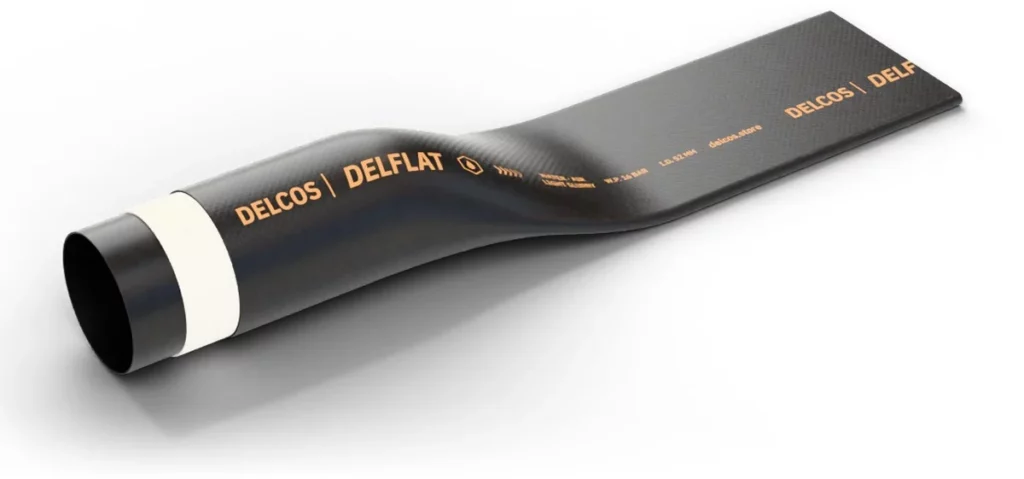
Applications
Surface or submersible pump, layflat or rubber discharge line, water with sand and mud: how to put together hoses for pumping water out of pits and trenches.
Send us the parameters — we will select the series and couplings.