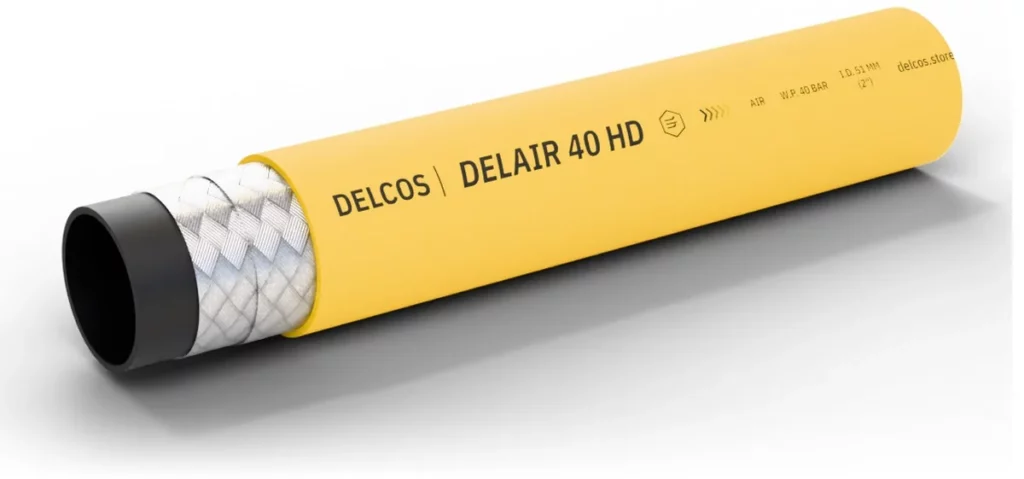
Selection
How to choose an air hose for a compressor and pneumatic tools
Pressure class, inner diameter, length, oil mist and temperature: what to check when choosing an air hose for a compressor and pneumatic tools.
Surface or submersible pump, layflat or rubber discharge line, water with sand and mud: how to put together hoses for pumping water out of pits and trenches.
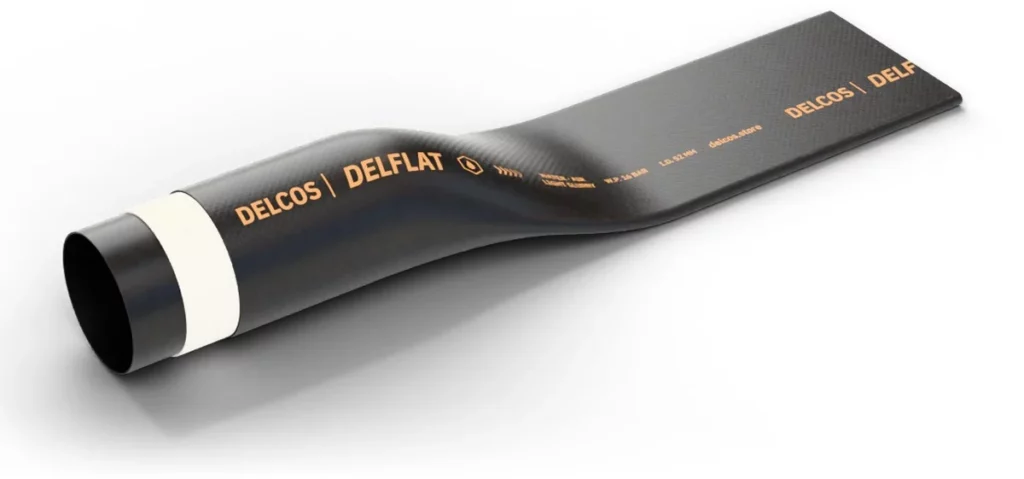
On a construction site, water has to be pumped out of foundation pits, trenches and excavations. The hoses matter as much as the pump: a suction hose that flattens stops the pump, and a discharge line with many joints leaks and takes longer to lay. Here is how to put together hoses for dewatering.
A surface pump, such as a motor pump, stands next to the pit and draws water through a suction hose. That hose needs a steel helix so it does not flatten under vacuum: DELFLEX 10 SD. How to choose it is explained in How to choose a suction hose for a motor pump.
A submersible pump sits in the water and pushes it out, so it needs no suction hose, only a discharge line from the pump outlet. DELFLEX AGRO 10 LF is a rubber layflat delivery hose for submersible pumps: ID 40–609 mm, 10 bar up to ID 305 mm and 5 bar for larger sizes.
For long discharge lines, layflat hoses are convenient: they roll flat when empty, take little space in transport and come in long lengths, so the line needs fewer couplings.
Where the hose must not kink, for example on a short connection at the pump outlet, use a round rubber hose: DELFLEX 10 D, a strong and very flexible delivery hose, ID 6–60 mm, 10 bar; for larger sizes DELFLEX 10 SD, which is rated for delivery as well, up to ID 305 mm.
Water from excavations often carries sand and mud, which wear the inner tube. For the suction side, DELHD 5 CR is a flexible, vacuum proof hardwall hose with an abrasion resistant inner tube, made for mud, sand and blasting media: ID 51–150 mm. For the discharge side, the polyurethane layflat hoses DELFLAT PU and DELFLAT HD are made for abrasive materials and sludge. A strainer at the inlet end of the suction hose keeps stones out of the hose and the pump.
Compare the maximum pressure of the pump with the working pressure of the hose at your size. For most layflat hoses in this article the working pressure is lower for larger diameters: DELFLAT, for example, is rated 25 bar at ID 20 mm and 10 bar at ID 203 mm; for DELFLAT PU it varies with the size, see its table. Pressure ratings apply to the hose itself, not to an assembly with couplings.
Our catalogue includes Storz, Camlock and Perrot couplings. We fit them to the hoses, or fit ends to the standard on your pump: see hose crimping and assembly.
Send us the details via the contacts page.
See also: How to order a hose assembly: what we need to know.
Selection
Pressure class, inner diameter, length, oil mist and temperature: what to check when choosing an air hose for a compressor and pneumatic tools.
Selection
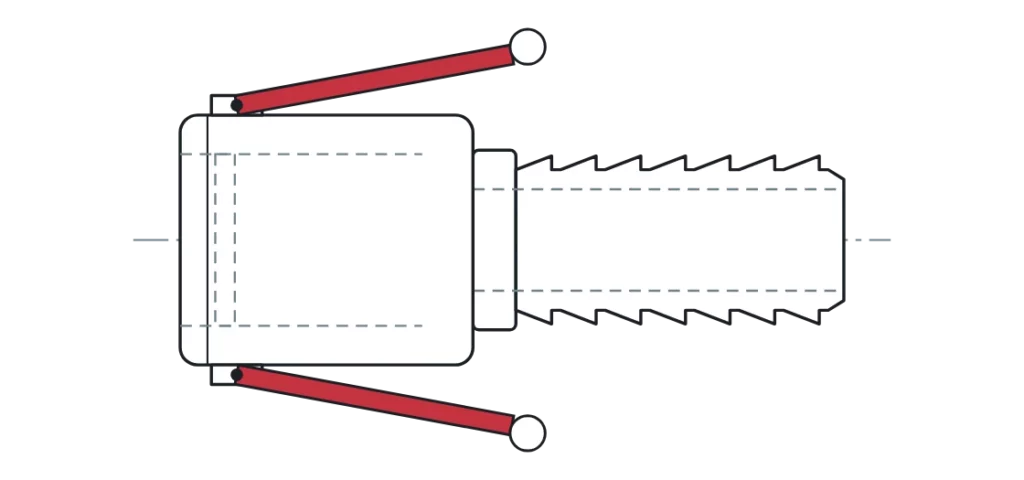
Which half of the coupling each Camlock type is, what is on its other end, how the types connect, and which sizes and materials are available.
Selection
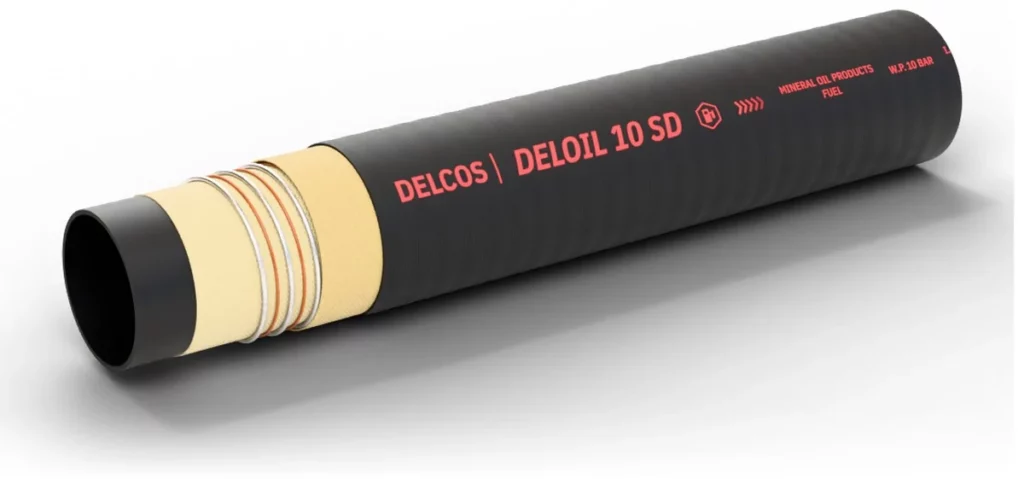
Suction or delivery only, what the hose can carry, static electricity, size and couplings: what to check when choosing a hose for diesel transfer.
Send us the parameters — we will select the series and couplings.