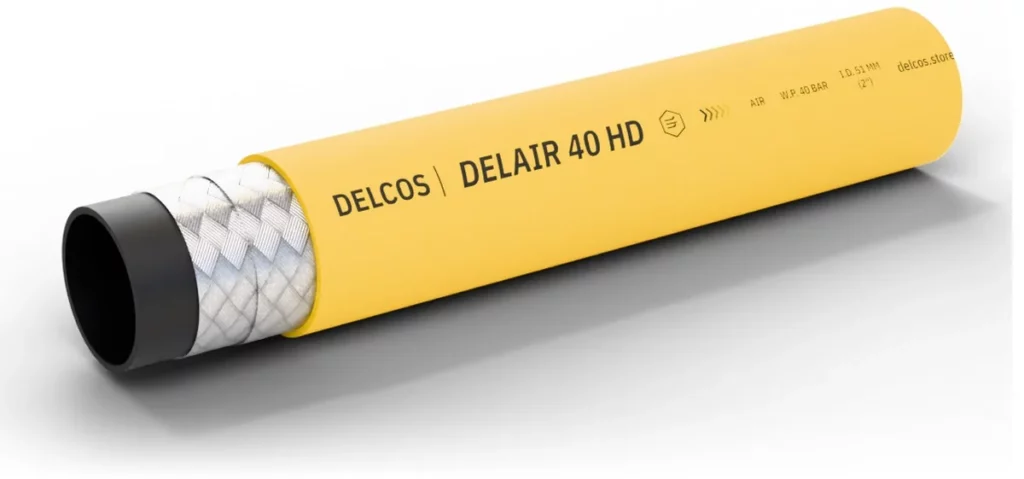
Selection
How to choose an air hose for a compressor and pneumatic tools
Pressure class, inner diameter, length, oil mist and temperature: what to check when choosing an air hose for a compressor and pneumatic tools.
The temperature of saturated steam is set by its pressure. Why DELSTEAM series are rated for +170 and +210 °C, and why superheated steam is dangerous for hoses.
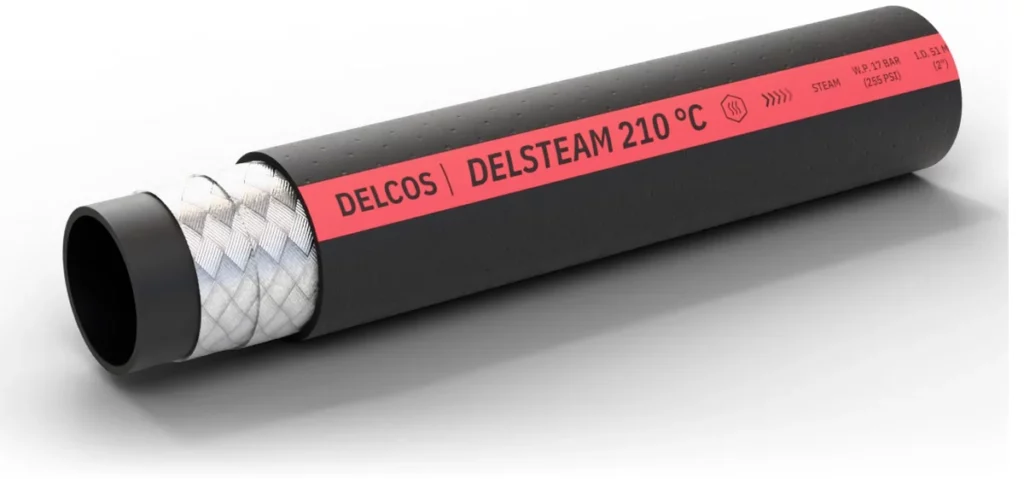
As long as steam contains water droplets, it is saturated: its temperature equals the boiling point of water at the current pressure. The temperature of saturated steam cannot be raised without raising the pressure. That is why a pressure gauge on a steam line shows at once how hot the hose will get.
The same data as a table. Gauge pressure is the pressure above atmospheric.
| Gauge pressure, bar | Saturated steam temperature, °C |
|---|---|
| 1 | 120 |
| 3 | 144 |
| 5 | 159 |
| 6 | 165 |
| 10 | 184 |
| 15 | 201 |
| 17 | 207 |
| 18 | 210 |
In DELSTEAM 170 °C and DELSTEAM 210 °C, the temperature in the series name is the upper temperature limit of the series, just above the saturated steam temperature at its working pressure. DELSTEAM 170 °C has a working pressure of 6 bar; steam at this pressure is about +165 °C, and the series is rated up to +170 °C. DELSTEAM 210 °C has a working pressure of 17 bar; steam at this pressure is about +207 °C, and the series is rated up to +210 °C.
| Series | Working pressure | Burst pressure | Temperature | Reinforcement |
|---|---|---|---|---|
| DELSTEAM 170 °C | 6 bar | 60 bar | up to +170 °C | high strength textile plies |
| DELSTEAM 210 °C | 17 bar | 170 bar | up to +210 °C, briefly up to +232 °C | high tensile steel wire |
Both series have a burst pressure ten times the working pressure. For steam this margin is justified: when a hose bursts, steam releases much more heat than hot water at the same temperature. The 170 °C series with textile reinforcement is designed for low pressure, the 210 °C series with steel wire reinforcement for high pressure.
If steam is heated further after evaporation, it becomes superheated: the pressure is the same, but the temperature is above the table value. On the chart this is the area above the line. A hose rated for +210 °C at 17 bar can run hotter than its limit in superheated steam.
Rubber ages faster above its temperature limit. For lines with superheated steam, check not only the pressure but also the actual steam temperature against the limit of the series.
After shutdown, the steam in the hose condenses. Moisture absorbed by the inner tube boils inside the rubber at the next heat-up, causing blisters and delamination. That is why a steam hose is drained after every use and stored without condensate.
The cover of both series is pin pricked: steam that has passed through the rubber escapes through small holes, and the cover does not blister.
Selection
Pressure class, inner diameter, length, oil mist and temperature: what to check when choosing an air hose for a compressor and pneumatic tools.
Selection
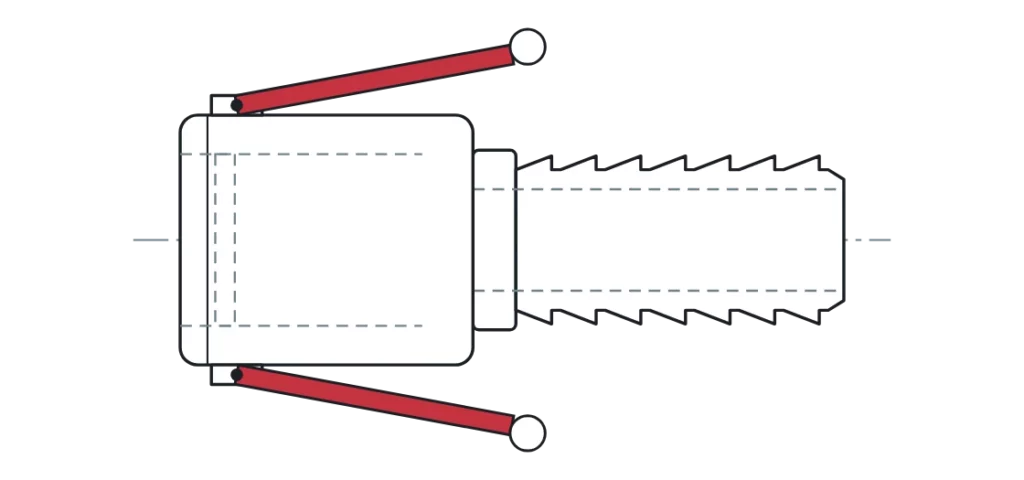
Which half of the coupling each Camlock type is, what is on its other end, how the types connect, and which sizes and materials are available.
Applications
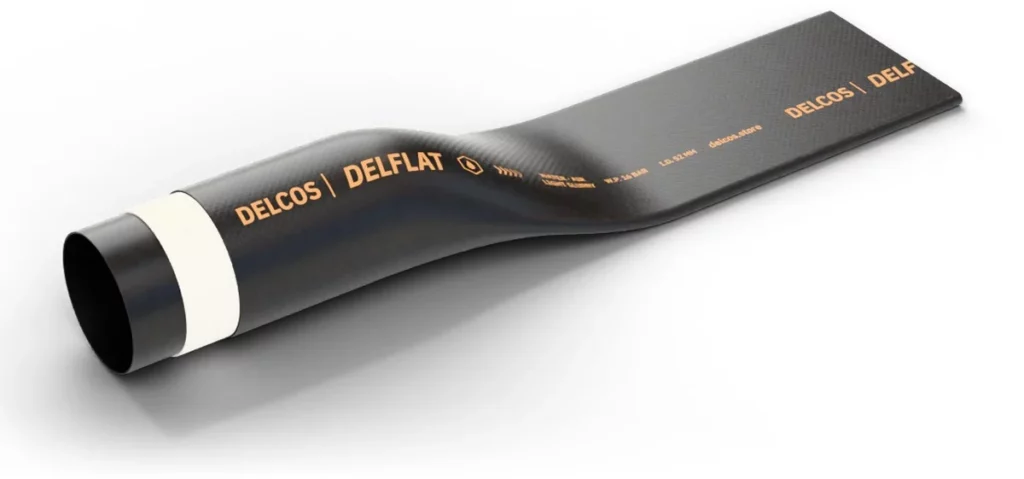
Surface or submersible pump, layflat or rubber discharge line, water with sand and mud: how to put together hoses for pumping water out of pits and trenches.
Send us the parameters — we will select the series and couplings.